Drip water
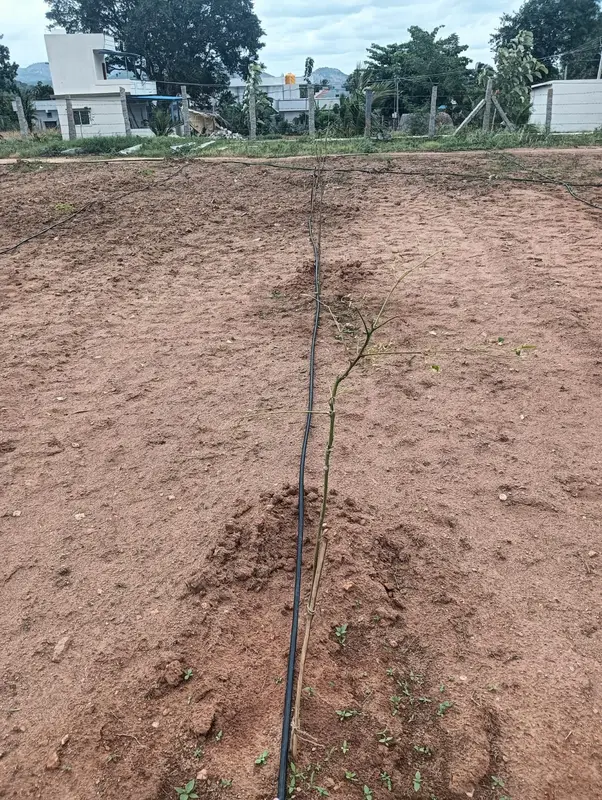
Drip lines carry water from two borewells to the trees. The pipes run above ground wherever no vehicle needs to cross. When the new borewell ran dry in April 2026, a groundwater survey marked a point where the aquifer is good.
The farm is fed and protected with what it grows: dung and urine from the cows, leaves from its own neem, pongamia and custard apple, and seed it keeps itself.
Drip lines carry water from two borewells to the trees. The pipes run above ground wherever no vehicle needs to cross. When the new borewell ran dry in April 2026, a groundwater survey marked a point where the aquifer is good.
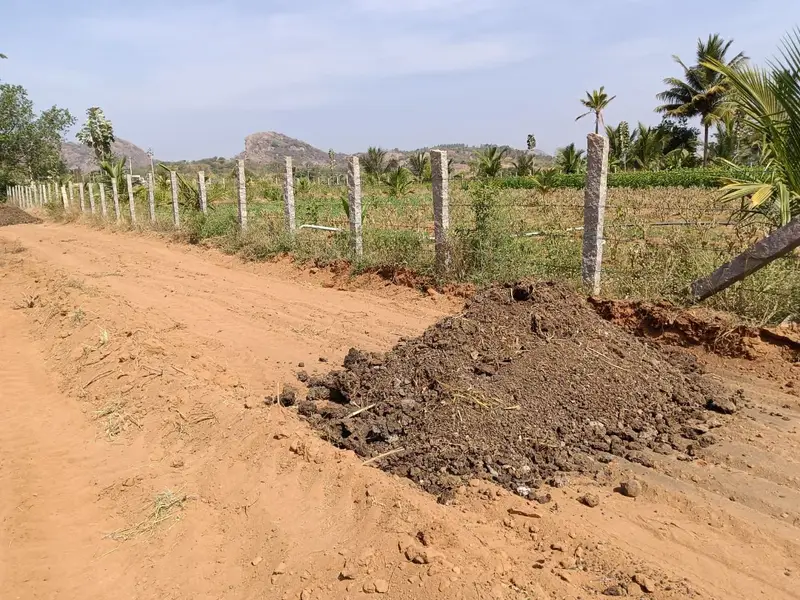
Cow dung went into the planting pits in 2024, and weak trees get more. Jeevamrutha is made on the farm from native cow dung and urine, jaggery and gram flour; the first batch, in September 2024, used dung and urine from neighbours' cows.
No hybrid seed is used; the family brings its own. Before sowing, seeds are treated with beejamrutha and dried in the shade for an hour.
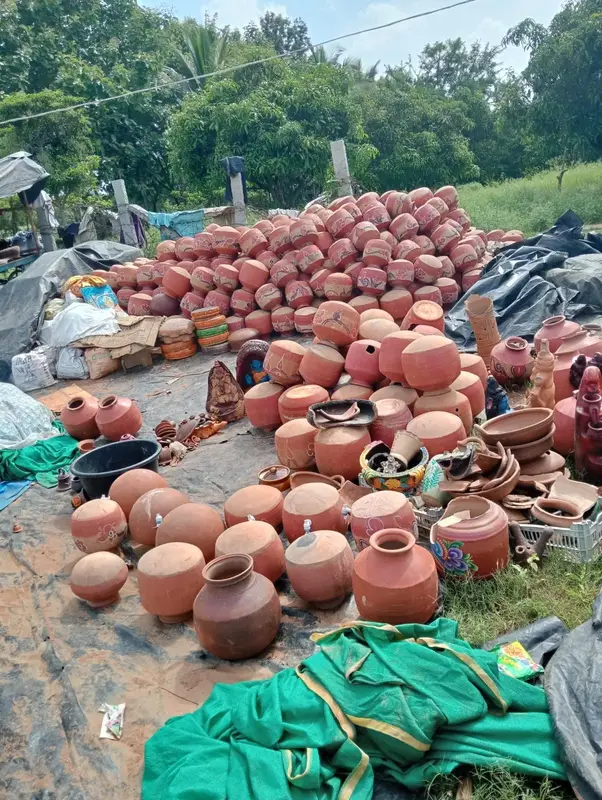
Pests are kept down with neem spray, brahmastra brewed in a clay pot from the farm's neem, pongamia and custard-apple leaves with cow urine, and neemamrutha against disease and mites on the sapota and custard apple.
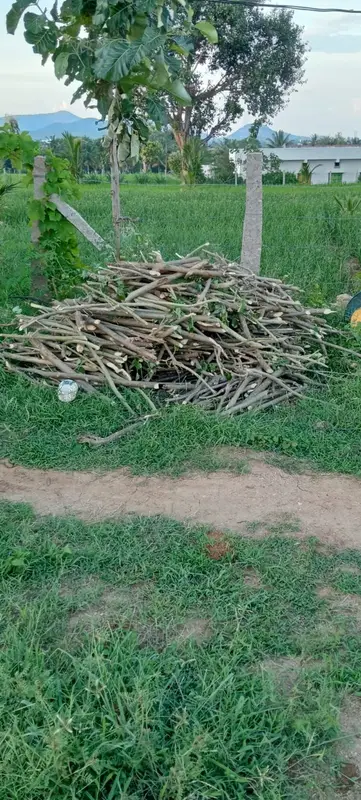
Gliricidia cuttings were planted along the fence in October 2024, kept back from the borewell pipeline.
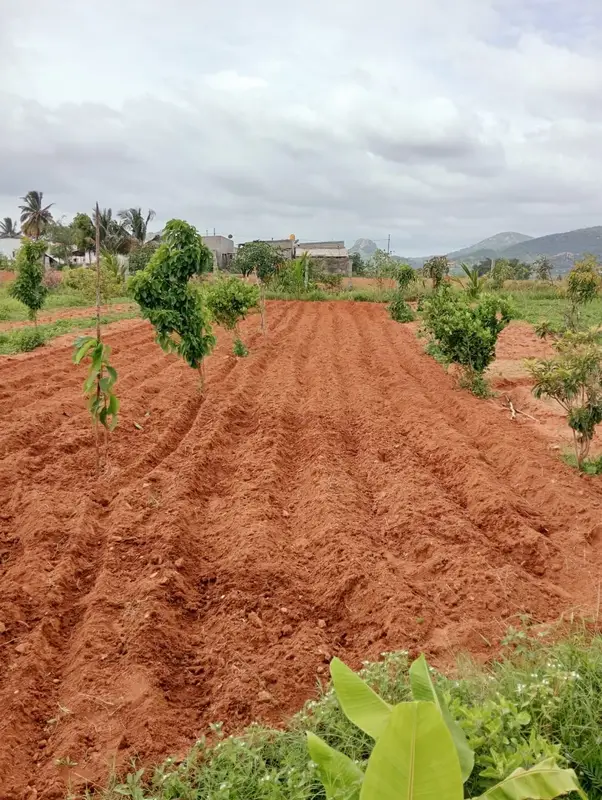
Since September 2024 a brush cutter and a tiller keep the weeds down between the rows. Around the saplings Mahesh weeds by hand.
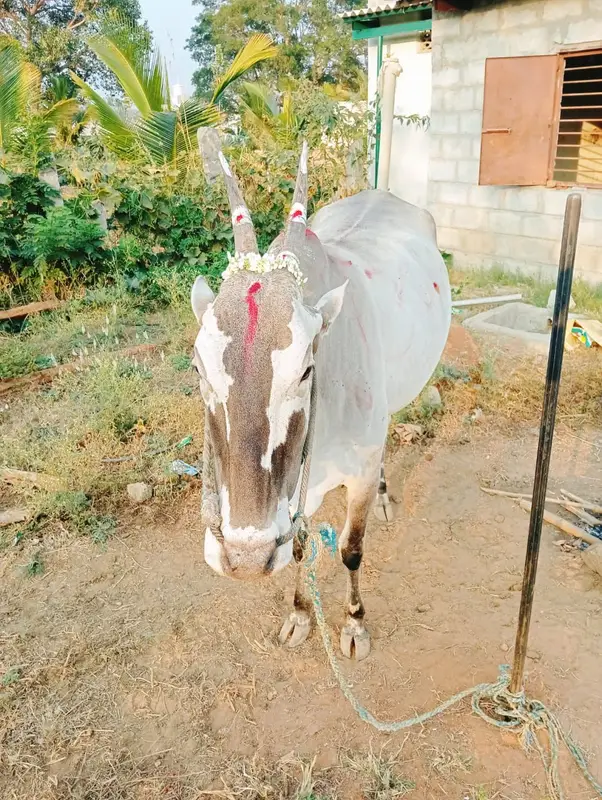
The first cow arrived on 30 April 2025, and a bull calf was born on the farm on 29 March 2026. Their dung and urine go into the jeevamrutha.
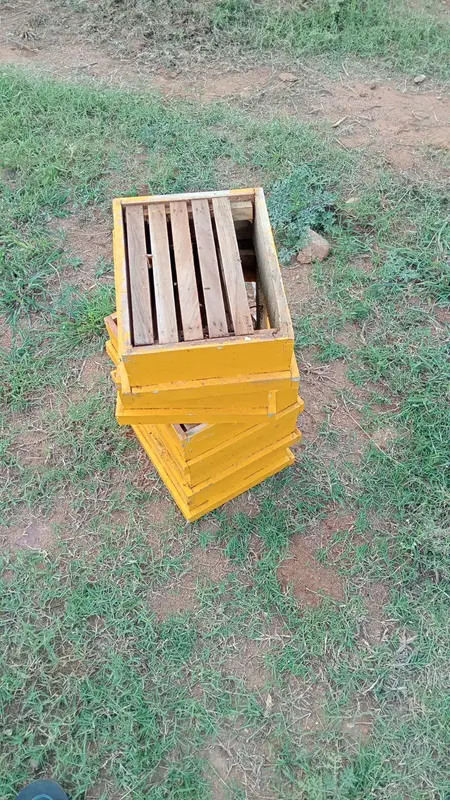
Ten bee boxes were set up on 13 June 2026. Their iron stands are greased, the ground around them is dusted with ant powder, and in summer each box gets a tile on top. In September the bees left two of the boxes.
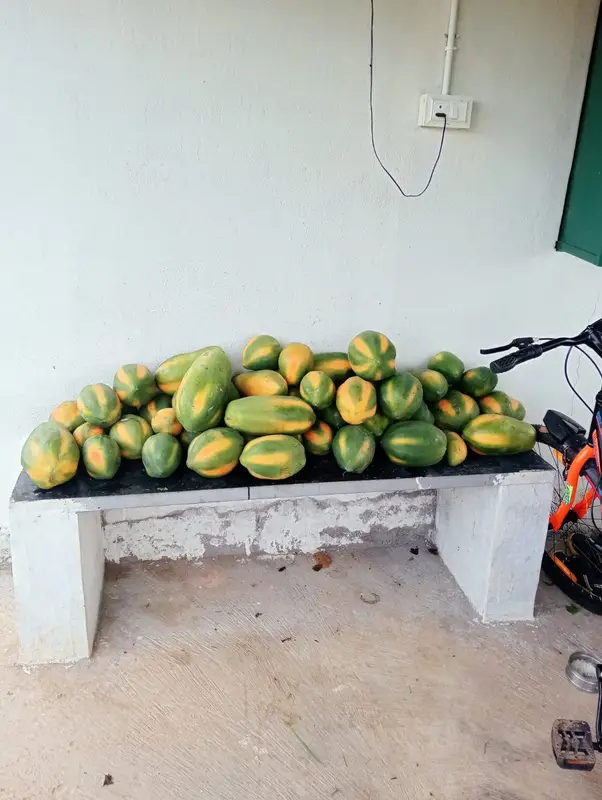
Produce the family can't use is given away. In June 2025 they kept ten papayas from a harvest and gave the rest to a school.